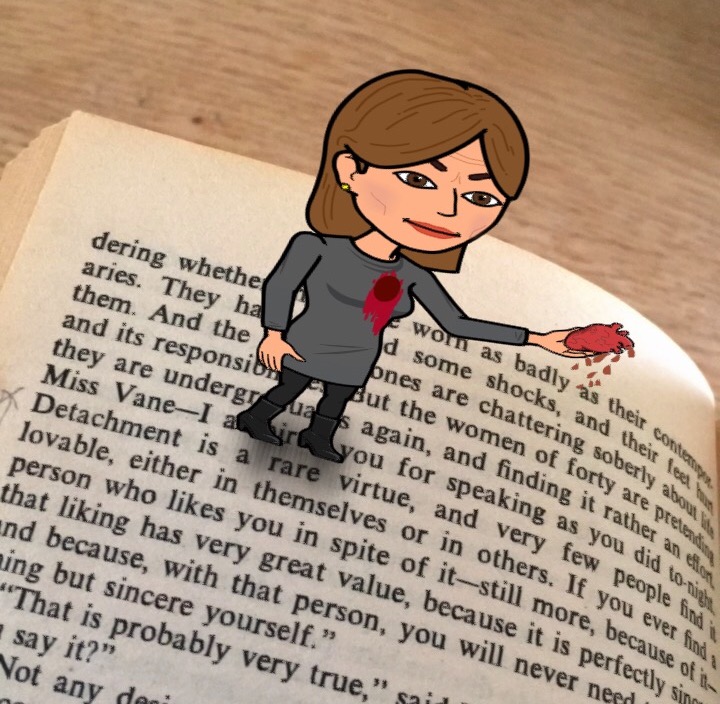
Pittsburgh vs. Paris. A Trial.

The Persons of the Play*

JUSTICE
Mr. PITTSBURGH, a businessman
Mrs. PITTSBURGH, née PARIS, his wife [not present]

Act I Scene 1

JUSTICE: Mr. Pittsburgh… [shuffling papers]. You want to get a divorce from your wife, Mrs. Pittsburgh, née Paris. Is that correct?

Continue Reading

Staying Sane In The Age of Algorithm

We live the age of algorithm. They’re the magic sauce which keeps our machines running. Their omnipotence has grown to a point where some see our bodies’ and minds’ inner workings as algorithms[1] – just like former epochs saw the universe or a mechanical turk in every human being. And – like all men-made gods – algorithms, too, are demonized,

Continue Reading

The Awkwardness Of Being Liked

I feel awkward about being liked[1]. On the surface, of course, just like all of us, I like to be liked[2]: I smile when someone gives me flowers or offers me a glass of wine; I feel uplifted when my words and actions – or even trivial things like pieces of clothing I’m wearing – receive a compliment; I nod in friendly appreciation when my posts of home-made bread, rainbow bodied avatars, or witty bits of wisdom uttered by my son attract responses in my social media feeds.

Continue Reading

Petty Dictators of the Internet. A Rant.

This is not a rant about Donald Trump[1]. It’s also not a rant about the internet in general. Those who read my blog more regularly will know that I actually, factually revere the internet in all its momentous sparkling grandeur – as well as in its ability to make us face ourselves as human beings with all our shortcomings[2]. Instead, this is a more specific rant about how that very same digital space has the means to turn us all into petty dictators

Continue Reading

How Facts Can Change

For the last couple of days, everybody has been talking about #alternativefacts. In this medial uproar, many (at least in my own echo chambers and filter bubbles) talk and write as if there were “facts” on the one hand, and “lies” on the other, with (of course) the “other side” being cast as the intentional producers of lies. As all simplified generalisations, this one, too, is problematic – to say the least.

Continue Reading

pounding 2016, so 2017 will rise

A year comes to a close. Some say, it was a good year. Some say, it was a bad year. Some say it was just another year, neither good nor bad. In this ambiguity of how people see it, at least, this year is no different from all other things that surround us: Owls that are nightingales, nightingales that are larks, larks that are dead serious, serious deaths that are fake news, fake news that are wiser and truer than owls.

Continue Reading

(Almost) Fifty Shades of Truth

The truth is struggling. Ever since The Economist, in one of its September issues, discovered and described the “post-truth world” we’re living in[1], it has become fashionable to complain about the disintegration of truth. More recently, this complaint has been further intensified by a broad debate about the nature and role of “fake news”[2]. If only, common sense and common opinions seem to say, we could get rid of all misperceptions, errors, lies, and outright deceit once and for all – then, we could live in a peaceful world made of truths, happily ever after.

Continue Reading

“No Virtualisation Without Co-Creation!”

“No taxation without representation” was the battle cry that eventually led to the United States independence from its British motherland back in 1776, sometimes also rendered as “Taxation without representation is tyranny”. It was complemented by the times’ enlightened thinkers’ belief that human beings are capable of rational decision making, sometimes even abstracting from their most immediate needs and wants in favour of some common good. A consequence of this double conviction – similarly enacted in other revolutionary movements in various places and times – was the emergence of the modern state as the main form of organising our ways of living together.

Today, the state is in crisis[1].

Continue Reading

The Digital Space of Phenomena

We live in digital times. Our universe is suffused with digital devices, digital communications, and global ideologies constructed from and around digital structures – physical, virtual, and intellectual. We can’t help but be permeated by this digital space in all its forms and formats, from the finest dust particles in our pockets clogging our smartphone’s power jacks to the vast and all-encompassing data clouds containing our memories, plans and projects, and current locations. Some say this pervasive presence of the digital takes us away from our true potential as human beings, destroying our jobs, scattering our attention, confusing our minds; some say it can help us to get closer to what we can be,

Continue Reading

No more posts.